Fresh-Air Cooling Solution for Offices: A Sustainable Way to Improve Workplace Comfort
Why Office Cooling Needs a Smarter Approach
Office cooling has become a serious infrastructure decision. Workplaces today include open seating areas, reception zones, cafeterias, meeting rooms, corridors, and admin blocks — each with different comfort needs. Long operating hours, equipment heat, employee density, and frequent movement can create uneven cooling if air is not distributed properly. This is why a cooling solution for offices should be evaluated not only by the equipment capacity, but also by how effectively air can be delivered across the required areas.
The larger climate and energy context also supports this shift. The India Energy & Climate Center’s 2025 report highlights the rapid rise in India’s space cooling demand, driven by urbanisation, heat waves, and growing use of air-conditioning. In West Asia, the Observer Research Foundation’s 2026 paper on Gulf heat resilience points to the need for sustainable cooling strategies as extreme heat continues to affect cities, infrastructure, and workplaces. For office owners and facility teams, the message is clear: cooling decisions must balance comfort, practicality, and long-term sustainability.
The Office Comfort Challenge Is Not Only About Temperature
In offices, discomfort often comes from uneven air movement rather than temperature alone. One area may feel warmer because of sunlight exposure, another may feel stagnant because of poor circulation, while high-traffic zones may require continuous air movement. A reception area, open work floor, pantry, and training room may all respond differently to the same cooling system. This makes office cooling a planning challenge, not just a product-selection exercise.
A 2024 review published in Results in Engineering notes that ventilation and air distribution influence indoor comfort through factors such as temperature, air velocity, humidity, and air quality. This is useful for office cooling discussions because it explains why airflow design matters. In a workplace, people experience comfort through the combined effect of temperature, movement of air, and freshness of the indoor environment. Therefore, a well-planned cooling system should address distribution, not just cooling generation.
What Makes Ducted Cooling Relevant for Offices?
Ducted cooling is useful when air needs to be delivered across multiple office areas from a centralised system. Instead of depending on equipment placed inside each zone, cooled air can be carried through ducts and supplied through selected grilles. This helps facility teams plan cooling around the actual layout of the workplace.
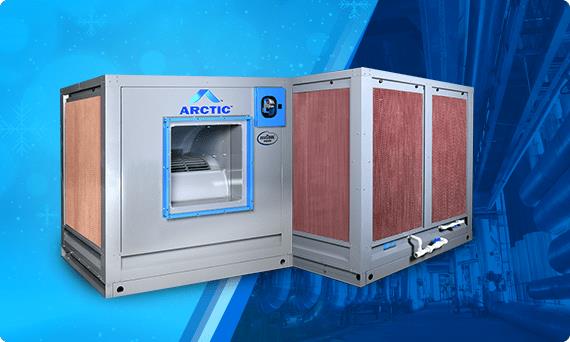
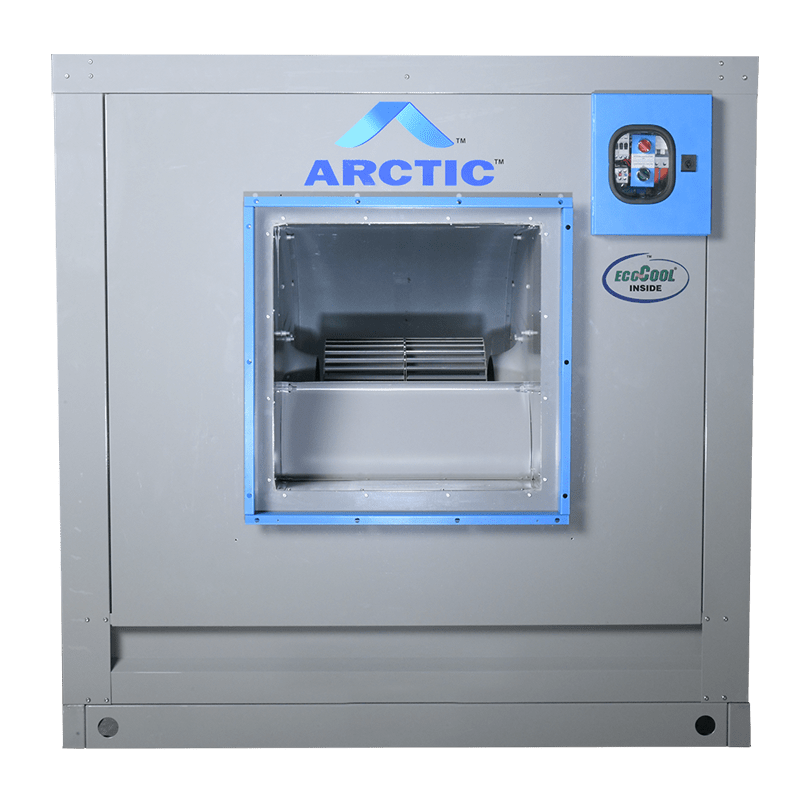
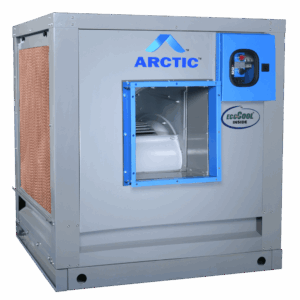
Arctic Ducted Evaporative Coolers are designed for central cooling using ducts. The product uses wet cooling pads, centrifugal fans/blowers, and is suitable for large industrial and commercial spaces, including offices. It provides high static pressure for long ducts and multiple grilles. This is important for office applications because air has to travel through the duct network before reaching occupied zones. For spaces where ceiling routes, outlet locations, and ventilation pathways can be planned properly, this approach can support more organised air delivery.
How Arctic Ducted Evaporative Cooling Works
Arctic Ducted Evaporative Coolers work on the natural process of evaporation. Hot outdoor air enters the unit and passes through wet cooling pads. As water evaporates, the dry bulb temperature of the air is reduced. This cooled humidified air is then supplied through ducts into the required areas. These ducted evaporative coolers introduce 100% cool fresh air into the space and help displace stale hot air through available openings.
Usually installed outside the building, Arctic air coolers bring in cool, clean, filtered, and fresh ambient air, helping maintain better comfort for occupants. By creating positive pressurisation inside the space, they support the natural or forced exhaust of CO₂, odour, vapour, internal heat, and stale air.
A Sustainable Cooling Approach for India and West Asia
For India and West Asia, office cooling has to be understood in the context of rising heat and growing commercial development. In India, the India Energy & Climate Center’s 2025 report estimates that the country may add 130–150 million new room air conditioners between 2025 and 2035, and that room ACs could add more than 180 GW to peak load by 2035 without targeted interventions. This shows why sustainable cooling discussions are becoming more important for buildings.
In West Asia, heat resilience has become a wider urban and economic concern. The Observer Research Foundation’s Gulf-focused paper discusses the impact of extreme heat on health, labour, infrastructure, and energy systems. This context encourages office owners and facility teams to rethink cooling choices with a stronger focus on comfort, sustainability, and long-term operating practicality.
Where Can Arctic Be Considered Within an Office?
Arctic Ducted Evaporative Coolers may be considered for office areas where centralised air delivery is practical. These may include open office floors, reception areas, corridors, cafeteria spaces, admin blocks, training rooms, and commercial office zones connected to larger facilities. The exact suitability depends on the site layout and climate conditions.
For example, an open office floor may need air supplied across a larger occupied area, while a reception zone may require air movement because of frequent entry and exit. A cafeteria may have changing occupancy levels and higher internal heat during certain hours. In such cases, duct design and outlet placement become important. The system should not be selected only as equipment; it should be planned as part of the office’s air distribution strategy.
What Should Be Checked Before Selection?
Before choosing Arctic as a Cooling Solution for Offices, the site should be evaluated carefully. The first factor is climate, because evaporative cooling performance depends on outdoor temperature and humidity. The second is layout, as duct routes and grille locations must be practical. The third is occupancy pattern, because different zones may have different cooling needs throughout the day.
Other factors include water availability, ventilation openings, maintenance access, roof or side-wall installation possibility, and the comfort level expected by occupants. A well-designed system can support workplace comfort more effectively than a poorly planned installation, even when the equipment itself is suitable.
Conclusion
Office cooling is moving beyond the idea of simply installing equipment to reduce temperature. Modern workplaces need better airflow planning, practical comfort, and sustainable thinking. Arctic Ducted Evaporative Coolers offer a centralised evaporative cooling approach for offices where ducted air distribution is possible and outdoor conditions are suitable.
For India and West Asia, where cooling demand is becoming a major concern, this solution can help businesses explore a more climate-aware approach to workplace comfort. The key is proper evaluation. When the office layout, duct design, ventilation pathway, and climate conditions are studied correctly, Arctic can be considered as a practical fresh-air cooling solution for commercial workspaces.
Looking for a sustainable cooling solution for your office?
Connect with Arctic’s Airgineers® to evaluate your office layout, cooling requirement, and ducted air distribution possibilities.
Frequently Asked Questions
1. What is a good cooling solution for offices?
A good office cooling solution should support comfort, airflow, and practical coverage across occupied areas. For offices where ducted air distribution is possible, Arctic Ducted Evaporative Coolers can be considered after site evaluation.
2. How does Arctic ducted evaporative cooling work?
The system draws outdoor air through wet cooling pads. Through evaporation, the dry bulb temperature of the air is reduced. This cooled air is then supplied indoors through ducts and grilles.
3. Can ducted evaporative cooling replace air-conditioning in offices?
It depends on the climate, humidity, layout, and comfort expectations. In some offices, it may work as the main cooling approach; in others, it may be suitable for selected areas. Expert consultation is recommended.
4. Why is ducted cooling useful for office spaces?
Ducted cooling allows air to be distributed through planned ducts and grilles. This can help serve larger or connected office areas more effectively than localised cooling methods.
5. What should be checked before installing Arctic in an office?
Key factors include climate, humidity, duct routing, office layout, water availability, maintenance access, ventilation openings, and expected comfort levels.
6. Is evaporative cooling a sustainable approach?
Evaporative cooling uses air and water through the natural process of evaporation. In suitable applications, it can support a more sustainable and energy-conscious approach to cooling.