Factory Cooling Solutions for Glass Industry | How to Keep Factory Cool in Summer
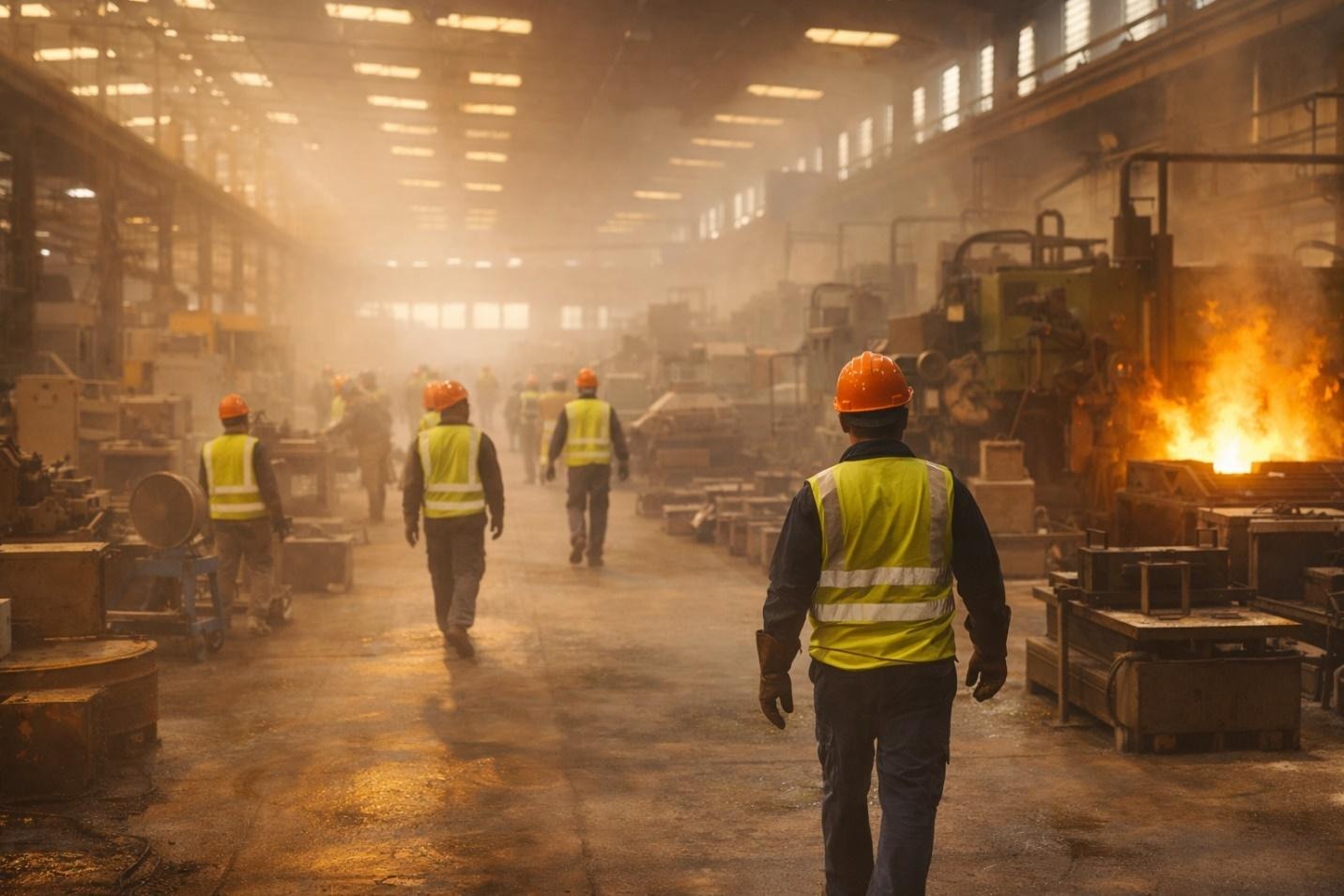
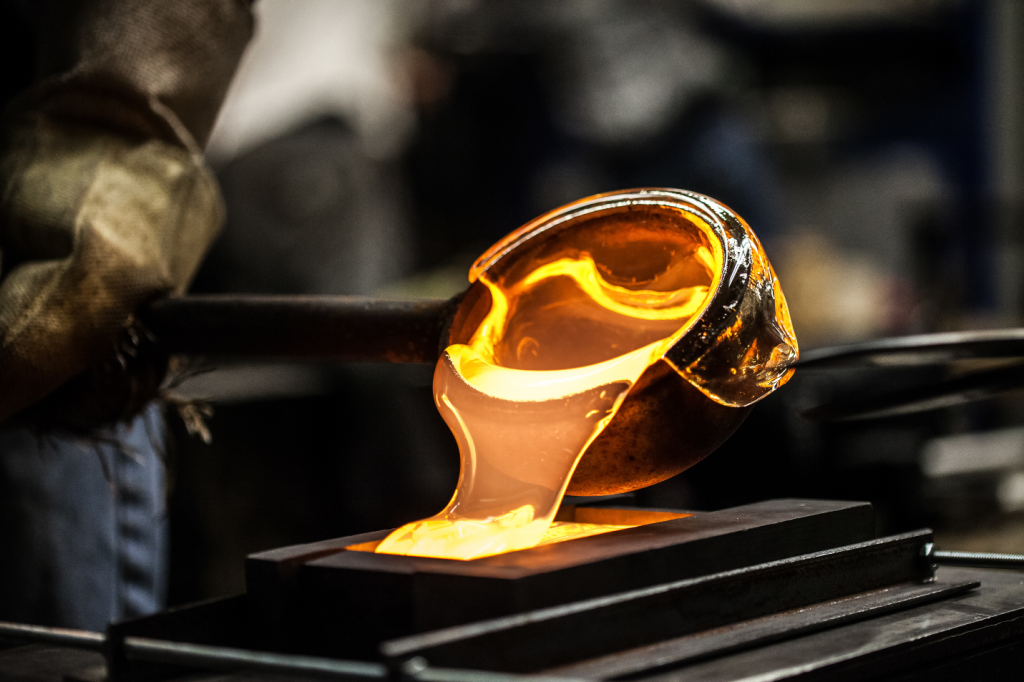
Glass manufacturing is one of the most heat-intensive industrial processes. From furnace areas to production floors, glass factories often experience high indoor temperatures, especially during peak summer months. The challenge becomes even greater in large shopfloor environments where doors, shutters, and production zones remain active throughout the day.
For plant owners, facility managers, and production teams, the question is simple yet critical: how to keep factory cool in summer without affecting daily operations?
This is where the right factory cooling solutions become important. A glass factory requires more than ordinary ventilation or small cooling units. It needs a planned air-cooling approach that improves comfort, supports airflow, and suits the working pattern of the plant.
Why Glass Factories Need Dedicated Factory Cooling Solutions
Glass factories operate in demanding conditions. Heat is generated from manufacturing processes, movement of material, machinery, and large production areas. During summer, outside temperatures add another layer of discomfort.
In such environments, workers may find it difficult to perform comfortably for long hours. Heat inside the factory can also make the shopfloor environment stressful, particularly in areas where protective gear is required. At ARCTIC, we understand that workplace heat has become a growing concern and that industrial facilities need to create a comfortable environment for employees.
General ventilation may help remove stale air, but it may not be enough to address the cooling requirement of large glass manufacturing areas. Pedestal fans or exhaust systems may move air from one point to another, but they do not always provide a structured cooling solution for wide industrial spaces.
That is why glass manufacturing plants need cooling systems that are planned according to application areas, working zones, airflow requirement, and operating conditions.
How to Keep Factory Cool in Summer in a Glass Manufacturing Plant
To keep a glass factory cool in summer, the approach should begin with understanding the factory layout. Every glass manufacturing facility has different zones, such as furnace areas, production lines, packaging areas, storage sections, and worker movement zones.
At ARCTIC, our factory cooling experts study the factory layout and recommend suitable solutions such as ducted cool airflow to work areas, on-spot cooling through portable coolers, and side or top discharge air coolers.

This makes the cooling strategy more practical because different areas of a glass plant may need different cooling methods. For example, some sections may require ducted airflow, while others may need spot cooling. Large open zones may need side or top discharge air coolers to support wider air movement.
Why Evaporative Cooling Works for Large Industrial Spaces
Evaporative cooling is widely used for large industrial and commercial spaces because it provides fresh and cool air while supporting ventilation. ARCTIC evaporative cooling solutions are suitable for industrial and commercial residential applications, with benefits such as increased ventilation, comfort, enhanced productivity, elimination of odors and stale air, and 100% fresh and cool air.
For glass factories, this is especially relevant because production floors require continuous air circulation to create a more comfortable working environment.
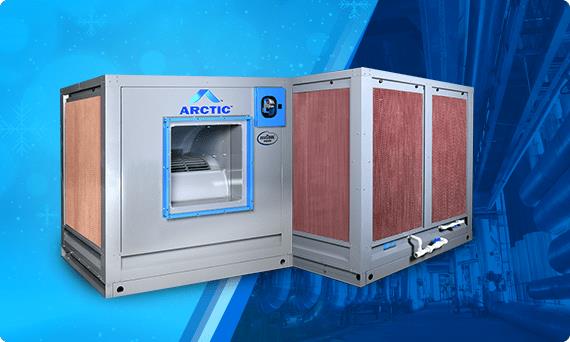
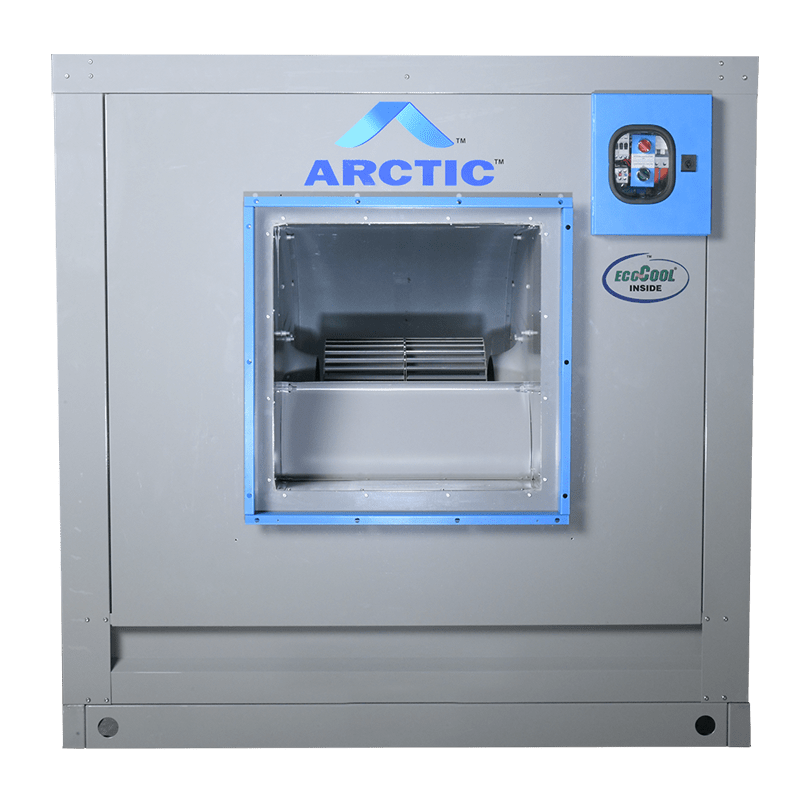
At ARCTIC, we offer a range of evaporative cooling products and solutions for large areas. Our product range includes ducted evaporative coolers, free flow evaporative coolers, spot coolers, Indirect Direct Evaporative Cooling (IDEC) solutions, and cooling pads.
This range allows us to recommend a solution based on the nature of the space instead of depending on a one-size-fits-all method.
Role of IDEC in Glass Factory Cooling
For glass manufacturing plants, Indirect Direct Evaporative Cooling (IDEC) is often considered a practical option because it supports cooling without directly adding humidity to the supply air. ARCTIC IDEC solutions use the advantage of cooling through water evaporation without increasing humidity in the supply air.
This is an important point for industrial users who want cooling and air movement but also want to avoid unnecessary moisture addition in specific areas.
Our IDEC solutions are designed for large industrial facilities, commercial spaces, manufacturing plants, warehouses, stadium seating areas, training areas, and distribution centers.
For a glass manufacturing plant, this makes IDEC a relevant factory cooling solution, especially where large-scale air cooling, comfort, and fresh air movement are required.
ARCTIC Factory Cooling Solutions for Glass Manufacturing Plants
ARCTIC, a Pahwa Group company, offers evaporative cooling products and solutions for large areas. With in-house manufacturing, application engineering experience, and quality systems, we provide cooling solutions for industrial applications.

For glass manufacturing plants, our solutions can help address common shopfloor cooling challenges through:
- Ducted cool air flow to working areas
- On-spot cooling with portable coolers
- Side discharge or top discharge air coolers
- IDEC solutions for applications where cooled air with minimal moisture addition is required
- Large-area evaporative cooling systems designed for industrial use
Our IDEC range also includes features such as double skin casing, high-efficiency centrifugal fans, EcoCool evaporative cooling pads, factory-manufactured and tested units, and plug-and-play readiness.

For glass factories, these features can support a more structured cooling approach for demanding production environments.
Benefits of Planned Cooling in Glass Manufacturing
A well-planned factory cooling solution can support both comfort and operational convenience in a glass manufacturing plant. When cooling is designed according to the factory’s layout, it becomes easier to direct air where it is actually required.
Some key benefits include:
- Improved worker comfort
Glass factory workers often operate in hot surroundings. Better air movement and cooling can help create a more comfortable shopfloor environment. - Better Ventilation
ARCTIC highlights increased ventilation as one of the benefits of evaporative cooling solutions. In large industrial spaces, fresh air circulation can help reduce the feeling of stale and trapped air. - Suitable Cooling for Large Areas
Glass manufacturing facilities usually have wide production floors. ARCTIC solutions are suitable for economically cooling large areas. - Flexible Application
Different zones in a glass factory may need different cooling methods. Our factory cooling experts can recommend options after studying the factory layout. - Lower Running Cost
ARCTIC evaporative cooling solutions can offer lower running cost compared to air conditioning, and our IDEC solutions consume less electricity compared to conventional air-conditioning.
Choosing the Right Cooling Solution for a Glass Factory
The right factory cooling solution should not be selected only on the basis of product size. It should be selected after understanding the factory’s heat load areas, worker zones, machinery layout, airflow path, and ventilation requirement.
For glass manufacturing plants, the cooling system should be able to serve large spaces and support fresh air movement. It should also be practical for daily industrial use.
This is why a layout-based recommendation becomes important. At ARCTIC, our factory cooling experts study the facility and recommend a suitable combination of cooling solutions, including ducted airflow, spot cooling, and side or top discharge air coolers.
Conclusion
Keeping a glass factory cool, especially in summer, requires more than temporary ventilation or localized fans. Glass manufacturing plants need planned factory cooling solutions that can address wide working areas, high heat conditions, worker comfort, and continuous industrial operations.
ARCTIC evaporative cooling solutions offer a practical approach for large industrial spaces, including glass manufacturing plants. With options such as ducted evaporative coolers, spot coolers, side/top discharge coolers, and IDEC solutions, we help factories create a more comfortable and better-ventilated working environment.
For glass factories looking for ways on how to keep factory cool in summer, ARCTIC factory cooling solutions provide a practical direction for industrial air cooling.
Frequently Asked Questions
1. Why do glass factories need dedicated factory cooling solutions?
Glass factories generate high heat due to manufacturing processes, large production areas, and continuous operations. During summer, this heat can make the shopfloor uncomfortable for workers. Dedicated factory cooling solutions help improve air movement, ventilation, and comfort in large industrial spaces.
2. How to keep factory cool in summer in a glass manufacturing plant?
To keep a glass factory cool in summer, the cooling system should be planned according to the factory layout. ARCTIC factory cooling experts can study the layout and recommend solutions such as ducted cool airflow, on-spot cooling through portable coolers, and side or top discharge air coolers.
3. Are evaporative coolers suitable for glass factories?
Yes, evaporative cooling solutions are suitable for large industrial spaces, including manufacturing plants. They provide fresh and cool air while supporting ventilation and comfort across large working areas.
4. What is the role of IDEC in factory cooling?
IDEC uses water evaporation for cooling without directly increasing humidity in the supply air. This makes it useful for industrial applications where cooled air and controlled moisture addition are important considerations.
5. What type of ARCTIC cooling solutions can be used in glass factories?
Depending on the factory layout and cooling requirement, ARCTIC solutions may include ducted evaporative coolers, spot coolers, side/top discharge coolers, portable coolers, and IDEC solutions.
6. Can ARCTIC help choose the right cooling system for a glass factory?
Yes. Our factory cooling experts can study the factory layout and recommend an optimal cooling solution based on the application and working areas.